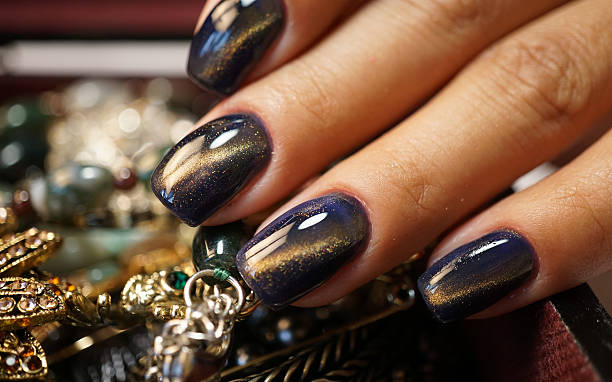
For formulation engineers and R&D managers in the nail aesthetics and chemical coating industries, achieving a crisp, highly defined magnetic “cat eye” line is the ultimate hallmark of a premium product. However, a common technical challenge arises during development: the same magnetic cat eye powder can produce vastly different visual depth, magnetic responsiveness, and shelf stability depending on the liquid medium.
Why does a pigment that creates a razor-sharp 3D cat eye effect in a high-viscosity gel polish suffer from rapid settling in solvent-based lacquers or poor alignment in fast-curing UV resin systems?
The answer lies in dispersion dynamics and formulation compatibility. Matching particle size, surface energy, and rheological behavior to your specific liquid carrier is essential for developing high-performance magnetic formulations.
1. Dispersion Performance Across the Three Main Liquid Systems
Understanding the physical and chemical environment of each application carrier allows formulation chemists to fine-tune particle behavior and prevent common batch failures.
A. Gel Polish Systems (UV/LED Oligomers)
-
System Characteristics: Medium-to-high viscosity, solvent-free or low-solvent content, photo-cured via UV/LED light.
-
Dispersion Dynamics: The higher structural viscosity of oligomers (such as polyurethane acrylates) helps suspend 4 to 6 μm ultra-fine magnetic powders effectively, preventing sedimentation during shelf storage.
-
Formulation Pitfalls: The primary challenge is photoinitiator interaction. Uncoated iron-based magnetic pigments can absorb or block specific UV wavelengths, leading to incomplete curing in deeper film layers. Furthermore, improper surface wetting can cause agglomeration, turning a smooth magnetic band into a grainy pattern.
B. Traditional Solvent-Based Nail Lacquers
-
System Characteristics: High solvent volatility (butyl acetate, ethyl acetate), fast air-drying, low operational viscosity.
-
Dispersion Dynamics: Because solvent-based lacquers lack a cross-linked oligomer network, unfunctionalized magnetic particles settle rapidly to the bottom of the bottle, forming hard cakes that are difficult to re-disperse.
-
Formulation Pitfalls: Fast solvent evaporation drastically shortens the workable window for magnetic alignment. If the solvent flashes off too quickly, the viscosity spikes before the magnetic field can fully pull the particles into a clean 3D line.
C. Industrial & Craft UV Resin Systems
-
System Characteristics: Thicker pour depth, varied curing speeds, high clarity requirements.
-
Dispersion Dynamics: UV resins require magnetic particles with exceptional magnetic susceptibility and fast torque response.
-
Formulation Pitfalls: Because UV resins cure rapidly under high-power lamps, the magnetic particles must realign within seconds under a standard neodymium magnet. If particle responsiveness is sluggish due to heavy surface coatings or poor wetting, the curing cycle locks the particles in place before the cat eye pattern reaches full depth.
2. Technical Q&A: Troubleshooting Magnetic Powder Formulations
Q1: Is surface treatment necessary for magnetic cat eye powders?
Yes. Raw, untreated ferromagnetic or iron oxide powders possess high surface energy, making them highly susceptible to oxidation (causing color shifts) and particle clumping.
-
Silane & Polymer Surface Coatings: Applying specialized silane coupling agents or hydrophobic surface treatments dramatically lowers surface tension. This improves wet-out in acrylate monomers and organic solvents.
-
Benefits: Surface-treated magnetic powders exhibit superior leafing properties, enhanced oxidation resistance, and smoother movement when exposed to external magnetic fields.
Q2: How do you solve particle settling and hard-caking in low-viscosity systems?
Preventing gravitational settling in solvent-heavy or low-viscosity lacquers requires building a dynamic thixotropic network:
-
Rheology Modifiers: Incorporate organoclays (e.g., bentonite/hectorite derivatives), fumed silica, or polyamide waxes to create a reversible gel structure at rest.
-
Surface-Treated Powders: Utilize surface-treated magnetic powders designed with lower effective density or hydrophobic outer layers that resist tight packing at the bottom of the container.
-
Viscosity Balance: Maintain a shear-thinning viscosity profile—high viscosity at rest to prevent settling, but low viscosity under shear (brushing) to allow free particle movement under a magnet.
Q3: How do you ensure adequate magnetic response speed in fast-curing UV resin systems?
When working with fast-curing UV matrices, magnetic response speed depends on three primary factors:
-
Optimized Particle Size Distribution: Particle sizes in the 4 to 8 μm range balance strong magnetic moment with minimal fluid drag.
-
Monodisperse Particle Sphericities: Irregular particle shapes increase viscous drag. Uniform, flake-like or spherical micro-particles rotate rapidly along magnetic field lines.
-
Monomer Viscosity Adjustment: Lowering the un-cured monomer viscosity slightly reduces shear resistance, enabling instant particle movement within 1 to 3 seconds of magnet exposure.
3. System Comparison Matrix for Formulation Engineers
| Performance Metric | Gel Polish System (UV/LED) | Solvent Nail Lacquer | Industrial UV Resin |
| Recommended Particle Size | 4 – 6 μm (Ultra-Fine) | 6 – 10 μm (Medium-Fine) | 5 – 8 μm (High Responsiveness) |
| Primary Failure Mode | UV cure inhibition / Agglomeration | Rapid settling / Hard caking | Sluggish alignment before cure lock |
| Key Additive Requirement | Wetting agents & photoinitiator balance | Organoclay / Thixotropic anti-settling agents | Low-drag reactive diluents |
| Workable Alignment Window | Long (Stays fluid until UV light exposure) | Very Short (10 – 30 seconds before solvent flash) | Short to Medium (3 – 10 seconds before curing) |
| Ideal Surface Treatment | Hydrophilic / Acrylate-compatible Silane | Hydrophobic / Fluorosilane | High-torque dispersant coating |
Summary & Premium Magnetic Pigment Solutions by BANGSAI
Choosing the right pigment powder is only the first step in creating a successful market-ready product; total formulation compatibility determines the final visual result. While high-viscosity gel polishes excel at suspending fine 4 to 6 μm magnetic particles, solvent lacquers require tailored anti-settling rheology, and UV resins demand ultra-fast magnetic torque responsiveness. By utilizing surface-treated powders and aligning particle characteristics with your specific solvent or resin carrier, formulation engineers can eliminate settling, prevent cure interference, and achieve crisp, multi-dimensional cat eye visual effects.
Partner with BANGSAI for Bulk Specialty Pigments & Glitters
At BANGSAI, we specialize in manufacturing and supplying high-purity magnetic cat eye powders, chameleon effect pigments, holographic glitters, and specialty cosmetic colorants for global polish manufacturers, OEM cosmetic factories, and chemical formulators.
-
Engineered Particle Consistency: Our bulk magnetic powders feature controlled particle size distribution, exceptional magnetic susceptibility, and high color purity for stable bulk production.
-
Custom Surface Treatments: We offer specialized surface-treated powders tailored for UV gel, solvent, and water-based systems to enhance dispersion and long-term shelf stability.
-
Complete B2B Supply Chain Support: From custom color matching and technical formulation guidance to scalable bulk supply and international regulatory documentation.
Optimize your next cat eye formulation with precision-engineered pigments. Contact the technical team at BANGSAI today to request technical datasheets, sample kits, and bulk quotation options!