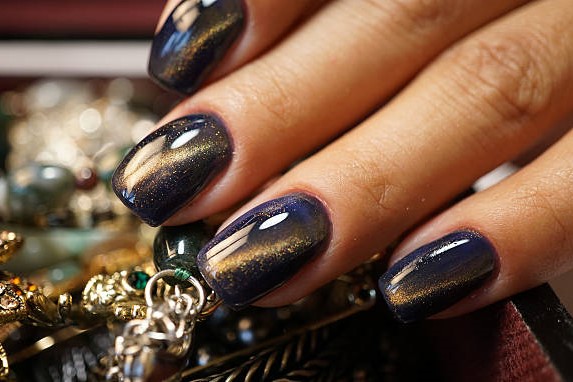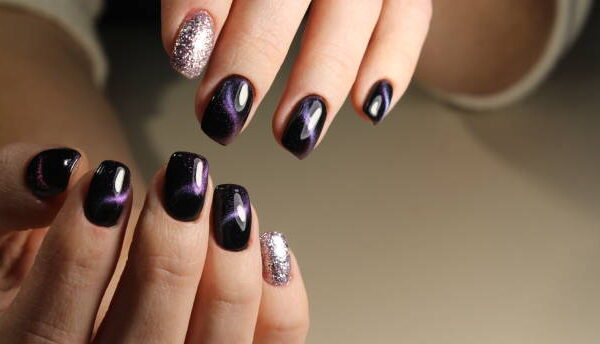
When evaluating specialized raw materials, cosmetics formulators, nail polish manufacturers, and industrial coating engineers often encounter a puzzling processing issue: “Why does a high-grade 4-6μm magnetic cat eye powder agglomerate or fly as dust during laboratory mixing, and how can formulation engineers achieve perfect dispersion without dulling the dynamic 3D light streak?”
Micro-fine magnetic pigments behave fundamentally differently from conventional heavy glitter flakes or coarse pearlescent powders. Due to their extreme surface area and high surface energy, ultrafine particles natural tend to form loose agglomerates or drift into the air as flying dust if incorporated improperly.
More importantly, high-shear mixing methods that work for standard pigments can shear, fracture, or distort delicate, multi-layered flake structures, directly degrading their magnetic orientation and chameleon color-shifting capabilities. This technical guide outlines the surface physics behind 4-6μm dispersion, step-by-step laboratory and production processing workflows, and optimal magnetic orientation protocols for magnetic cat eye powder.
1. Surface Energy and Shear Balance in Ultrafine Magnetic Pigments
Ultrafine magnetic pigments behave differently from conventional metallic pigments. Their small particle size increases the influence of surface forces during mixing.
| Dispersion Variable | Physical Response | Effect on Optical Performance |
|---|---|---|
| High-Shear Mixing | Breaks agglomerates but can damage delicate flakes | May weaken the 3D cat eye effect |
| Low-Shear Mixing | Preserves flake structure but requires proper wetting | Maintains optical clarity and magnetic movement |
| Direct Dry-Powder Addition | Traps air between fine particles | Creates clumps and uneven dispersion |
| Pre-Wetting | Improves resin penetration between particles | Produces smoother and more uniform dispersion |
Why 4–6μm Pigments Form Agglomerates
At 4–6μm particle sizes, surface forces can strongly influence particle behavior. Dry particles can attract each other and form compact agglomerates.
When operators add dry powder directly into high-viscosity resin, trapped air can prevent complete wetting. As a result, the pigment may form floating clumps that resist further dispersion.
Fine particles can also generate dust during powder handling. Their low individual mass makes them easier to suspend in the surrounding air.
Why Excessive Shear Can Damage Magnetic Flakes
Premium magnetic cat eye pigments often use delicate ferromagnetic flakes with multilayer optical coatings.
High-speed dispersers, bead mills, and three-roll mills can generate excessive mechanical stress. This stress may deform the flake structure or damage functional optical layers.
Therefore, manufacturers should avoid aggressive grinding when the formulation depends on a sharp, dynamic 3D cat eye effect.
2. Standard Pre-Dispersion Process for Magnetic Gel Formulation
A controlled pre-dispersion process can reduce clumping while protecting magnetic flake integrity.
Step 1: Prepare the Pigment Slurry
Do not add dry magnetic pigment directly into a large volume of high-viscosity UV or LED gel.
Instead, place the required pigment quantity into a clean mixing vessel.
Step 2: Add a Low-Viscosity Binder
Add a small amount of compatible base resin, monomer, or binder. A starting weight ratio of approximately 1:1 to 1:2 can provide effective wetting.
The exact ratio should match the resin viscosity and pigment characteristics.
Step 3: Mix at Low Speed
Stir the mixture manually or at low speed, preferably below 300 RPM.
Continue mixing until the slurry becomes smooth and free from visible pigment clumps.
This initial wetting step helps remove air pockets between the fine flakes without applying excessive shear.
Step 4: Dilute the Pre-Dispersion
Gradually add the pigment slurry to the remaining gel base.
Maintain gentle and continuous agitation throughout the dilution process. This approach promotes uniform pigment distribution while reducing mechanical stress.
3. De-Aeration and Magnetic Settling Control
High-viscosity UV gels can easily trap air during pigment incorporation. Micro-bubbles can reduce optical clarity and interfere with magnetic orientation.
Allow Natural Bubble Release
After blending, allow the formulation to rest for approximately 10–15 minutes at room temperature.
This resting period allows entrapped micro-bubbles to rise and escape naturally.
Avoid Aggressive Centrifugal Defoaming
High centrifugal forces can accelerate the settling of dense ferromagnetic particles.
Excessive force may cause pigment accumulation at the container bottom. Over time, this accumulation can form difficult-to-break pigment cakes.
4. Control the Magnetic Activation Window
Magnetic alignment depends heavily on the viscosity and curing behavior of the gel.
After applying the magnetic gel evenly, manufacturers should activate the magnetic field during the appropriate working window.
A typical starting point is approximately 30–60 seconds after application.
However, the ideal timing depends on the formulation’s viscosity, curing speed, film thickness, and magnet strength.
Applying the magnet too early may allow excessive material movement. Applying it too late can reduce flake mobility after surface structure begins to develop.
Proper timing helps produce a sharper and more defined magnetic light band.
5. Use Mixing Beads for Packaged Magnetic Products
Professional and retail formulations can benefit from built-in mixing beads.
Manufacturers can place compatible glass or stainless-steel mixing beads inside the bottle.
Users can then shake the package before application. This action helps redisperse settled magnetic flakes and improves formulation consistency.
The bead material should remain chemically compatible with the formulation and packaging system.
6. Premium 4–6μm Magnetic Flakes vs. Standard Metallic Pigments
Particle size and surface treatment significantly influence dispersion and optical performance.
| Performance Metric | Premium 4–6μm Magnetic Flakes | Standard Metallic Pigments |
|---|---|---|
| Particle Size | Controlled 4–6μm range | Often wider and coarser distribution |
| Dispersion | Easier to control with proper wetting | More prone to agglomeration |
| Magnetic Response | High magnetic responsiveness | Lower or less defined response |
| Surface Protection | Multilayer protective coating | May have limited surface protection |
| Optical Effect | Sharp 3D magnetic light band | More static metallic appearance |
| Color Shift | Supports dynamic chameleon effects | Usually weaker color-shift performance |
| Texture | Smooth and refined | May produce a coarser appearance |
Premium magnetic flakes can therefore provide stronger optical effects when the formulation uses an appropriate dispersion process.
7. Formulation Guidelines for UV/LED Cat Eye Gel Manufacturers
Formulation engineers should control several variables when developing professional magnetic gel systems.
Optimize Resin Thixotropy
Choose a resin system with suitable thixotropic behavior.
The formulation should flow under gentle movement to allow magnetic alignment. It should also recover sufficient viscosity at rest to stabilize the light band.
Control Pigment Loading
A starting pigment concentration of approximately 1.5%–3.0% by weight can provide a useful formulation range.
However, manufacturers should optimize the final concentration through application and optical testing.
Excessive pigment loading can increase particle crowding and light blockage. It can also reduce magnetic mobility and make the light band less defined.
Add Suitable Wetting Agents
Non-ionic wetting and dispersing additives can improve pigment wetting and reduce surface tension.
A starting dosage of approximately 0.2%–0.5% may help improve dispersion.
The final dosage should depend on resin compatibility, pigment surface treatment, and finished-product requirements.
8. Recommended Processing Workflow
For consistent production results, manufacturers can follow this general workflow:
Measure Pigment → Pre-Wet with Binder → Low-Shear Mixing → Gradual Dilution → Natural De-Aeration → Magnetic Alignment Testing → Final Quality Inspection
This sequence reduces unnecessary mechanical stress while improving pigment wetting and dispersion consistency.
Technical Summary
Successful dispersion of 4–6μm magnetic cat eye powder requires controlled wetting and low-shear processing. Avoid aggressive grinding because excessive shear can damage delicate magnetic flakes and reduce optical performance.
Manufacturers should instead use pre-dispersion, gentle mixing, controlled de-aeration, and optimized magnetic activation timing.
BANGSAI supplies 4–6μm high-sensitivity magnetic cat eye pigments with multilayer protective coatings, controlled particle sizing, smooth dispersion, and dynamic chameleon color effects for cosmetics and specialty coating applications.