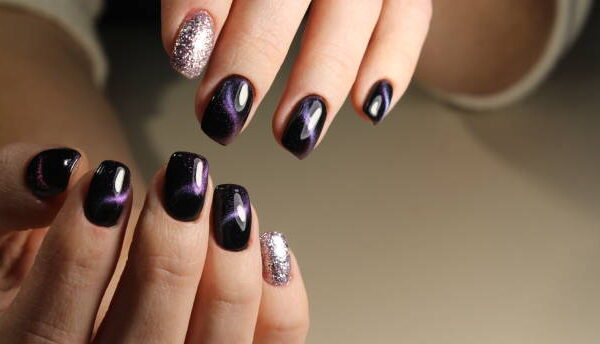
Automotive OEM formulation chemists, refinish paint manufacturers, and custom coating specialists constantly seek advanced optical pigments that deliver distinctive visual depth without compromising coating durability. While traditional metallic flake and standard pearlescent coatings offer basic directional shimmer, modern automotive finishes increasingly demand dynamic three-dimensional (3D) optical depth. Consequently, paint formulators and commercial procurement managers frequently ask specialty pigment suppliers a core technical question: “What is the functional value of cat-eye magnetic powder in automotive coatings, and how does it technologically outperform traditional metallic paints?”
Relying on standard aluminum flakes limits paint designs to two-dimensional reflection profiles, offering little spatial movement or dynamic depth under varying light angles. Incorporating magnetic pearlescent pigments—commonly designated as cat-eye magnetic powder for automotive coatings—enables paint formulators to engineer deep 3D optical patterns using magnetic field alignment during the wet film phase. Understanding particle size physics, UV resistance thresholds, binder compatibility, and application parameters allows automotive coating manufacturers to industrialize high-value 3D metallic finishes. This technical guide examines particle alignment mechanics, performance comparisons, technical constraints, and B2B procurement standards for magnetic pearlescent pigments.
What Is Cat Eye Magnetic Powder and How Does It Create a 3D Effect?
Cat eye magnetic powder is a special effect pigment designed for automotive coatings, decorative paints, and specialty printing applications. It typically uses synthetic mica or glass flake substrates coated with iron oxide (Fe₂O₃ or Fe₃O₄) and titanium dioxide (TiO₂) layers.
Unlike traditional metallic pigments that settle flat during paint drying, magnetic pigments respond to external magnetic fields during the wet coating stage. When manufacturers apply a patterned magnet before curing, the magnetic flakes rotate and align in different directions.
After curing, the oriented pigment particles reflect light from multiple angles. As a result, the coating creates a dynamic 3D cat-eye effect that changes with viewing position and lighting conditions.
This optical technology provides automotive brands and coating manufacturers with a unique alternative to conventional aluminum metallic finishes.
Applications of Cat Eye Magnetic Pigments
Cat eye magnetic powder supports various industrial coating applications, including:
- Automotive OEM basecoat systems
- Vehicle refinishing paints
- Wheel rim coatings
- Interior automotive trim finishes
- Decorative industrial coatings
- Gravure, screen, and flexographic printing inks
Its magnetic response and pearlescent appearance make it suitable for products requiring premium visual effects and enhanced surface aesthetics.
Cat Eye Magnetic Powder vs Traditional Metallic Paint
| Performance Feature | Traditional Aluminum Metallic Paint | Cat Eye Magnetic Pigment Coating |
|---|---|---|
| Optical Effect | Flat metallic sparkle with 2D reflection | Dynamic 3D depth with moving light effect |
| Flake Orientation | Particles settle in parallel during drying | Magnetic field controls particle alignment |
| Pigment Structure | Aluminum flakes in a resin system | Magnetic iron oxide coated mica or glass flakes |
| Magnetic Response | No magnetic orientation capability | Responds to external magnetic fields |
| Surface Performance | Aluminum may oxidize if the coating fails | Metal oxide coating improves stability |
| Application Process | Standard spray coating | Requires magnetic alignment during wet coating |
Key Technical Factors for Automotive Magnetic Coatings
Developing high-quality automotive coatings requires careful control of pigment properties and coating formulation.
1. Particle Size Distribution
Particle size directly affects visual depth, surface smoothness, and application performance.
| Particle Size | Performance Characteristics |
|---|---|
| Below 10μm | Provides smooth coverage but creates weaker 3D patterns |
| 10–60μm | Offers the best balance between visual depth and spray performance |
| Above 60μm | Creates stronger sparkle but may increase surface roughness |
A particle size range of 10–60μm typically provides strong magnetic alignment while maintaining compatibility with standard spray equipment.
2. Weather Resistance and UV Stability
Automotive coatings must maintain appearance under long-term outdoor exposure.
High-quality cat eye magnetic pigments use inorganic oxide coatings to improve weather resistance. These protective layers help maintain color stability, gloss retention, and magnetic performance during UV exposure and environmental aging.
Quality testing may include accelerated weathering evaluations, such as QUV testing and Xenon Arc exposure according to ISO 4892-2 standards.
3. Coating System Compatibility
Magnetic pigment performance depends on the resin system and coating viscosity.
During application, the paint must remain fluid long enough for magnetic particles to align correctly. At the same time, the coating must achieve sufficient stability to prevent pigment movement before curing.
Automotive formulators typically optimize viscosity, drying time, and bake conditions between 120°C and 140°C.
Purchasing Guide for Magnetic Effect Pigments
Automotive paint manufacturers and coating distributors should evaluate several technical factors before selecting a magnetic pigment supplier.
Verify Coating Compatibility
Request technical data showing pigment performance in different coating systems, including:
- 2K polyurethane coatings
- Solvent-based acrylic coatings
- Waterborne automotive coatings
The pigment should provide stable dispersion without causing settling or coating defects.
Check Weathering Performance
Confirm that the pigment meets automotive coating requirements, including:
- UV resistance
- Heat stability
- Chemical resistance
- Long-term color retention
These properties help maintain coating appearance throughout the vehicle lifecycle.
Evaluate Batch Consistency
Magnetic response consistency directly affects final pattern quality.
Professional pigment manufacturers should perform batch testing to ensure stable magnetic susceptibility and uniform 3D effects across production runs.
Conclusion: Advanced 3D Effects with Cat Eye Magnetic Powder
Cat eye magnetic powder provides automotive coating manufacturers with an effective solution for creating dynamic 3D metallic finishes. Through precise magnetic alignment of ferromagnetic pearlescent particles, manufacturers can achieve visual effects beyond traditional metallic paints.
BANGSAI develops high-purity cat eye magnetic powders, pearlescent pigments, and specialty effect pigments for automotive coatings and industrial applications. With consistent quality control and customized pigment solutions, BANGSAI supports global brands in developing distinctive surface finishes.