How to Evaluate Glow-in-the-Dark PLA Filament: 5 Key Quality Factors for B2B Buyers
Evaluating glow-in-the-dark PLA filament requires more than checking its color or visible brightness. B2B buyers need to verify photoluminescent performance, extrusion consistency, nozzle compatibility, and regulatory documentation before placing bulk orders. 👉Glow in the Dark Pigments
Low-quality filament may contain coarse glow pigments or inconsistent raw materials. These defects can cause nozzle clogging, diameter fluctuations, poor layer quality, and weak afterglow performance. Therefore, procurement teams should assess pigment chemistry, particle size distribution, diameter tolerance, luminance decay, and supplier compliance records.
This guide explains how to evaluate glow-in-the-dark PLA filament, test supplier samples, and select materials for reliable commercial 3D printing.
1. What Defines High-Quality Glow-in-the-Dark PLA Filament?
The most important quality indicators include pigment composition, particle size, dimensional precision, afterglow performance, and safety documentation. Comparing these specifications helps buyers distinguish engineered 3D printing materials from low-cost alternatives.
| Performance Metric | Low-Cost or Substandard Filament | Higher-Grade Glow PLA |
|---|---|---|
| Pigment chemistry | Zinc sulfide (ZnS) or coarse, poorly refined powders | Strontium aluminate (SrAl₂O₄:Eu,Dy) |
| Pigment particle size (D50) | Uncontrolled or potentially larger than 45 μm | Target range of 15–25 μm |
| Filament diameter tolerance | Approximately ±0.05–0.08 mm in the examples described | Target tolerance of ±0.03 mm or tighter |
| Afterglow performance | May lose visible brightness rapidly, potentially within 30 minutes | Can provide sustained afterglow, with some formulations targeting 8–12 hours or longer |
| Compliance documentation | Missing or unverified safety documents | MSDS or SDS, plus applicable RoHS and REACH documentation |
These figures are useful screening benchmarks rather than universal industry standards. Actual performance depends on pigment formulation, loading, resin quality, extrusion conditions, test methods, and the intended printer configuration.
Buyers should request test reports and compare samples under consistent conditions instead of relying on specification sheets alone.
2. Five Technical Factors to Check Before Bulk Purchasing
2.1 Pigment Chemistry: Strontium Aluminate vs. Zinc Sulfide
Pigment chemistry strongly influences brightness, afterglow duration, and product positioning.
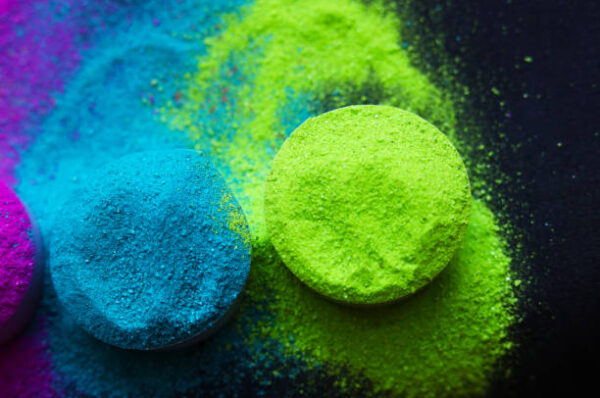
Strontium aluminate pigments, commonly activated with europium and dysprosium, are widely used in high-performance photoluminescent materials. Compared with conventional zinc sulfide pigments, suitable strontium aluminate formulations can provide brighter and longer-lasting afterglow.
However, buyers should not evaluate pigment chemistry in isolation. They should also confirm the pigment grade, loading level, dispersion quality, and compatibility with the PLA carrier resin.
For B2B applications requiring consistent glow performance, request the pigment type and supporting performance data before approving a supplier.
2.2 Pigment Loading and Particle Size Distribution
Glow-in-the-dark PLA filament commonly uses pigment loading in the range of 10%–20% by weight, depending on the formulation and desired optical performance.
Higher pigment loading can improve brightness, but it may also increase brittleness or affect extrusion behavior if the resin formulation is not optimized.
Particle size distribution is equally important. A target D50 of 15–25 μm can help balance pigment dispersion and printability. Coarser particles may increase the risk of nozzle blockage, especially when printing through small nozzles. Excessively fine particles may alter optical performance and should be evaluated through formulation-specific testing.
For procurement teams, the key checks are:
- Pigment loading: Confirm the percentage by weight and its effect on printability.
- Particle size: Request D50 data and, where available, the full particle size distribution.
- Dispersion quality: Check for agglomeration, uneven glow, and visible defects in test prints.
- Nozzle compatibility: Test the filament with the nozzle diameter and material recommended for the intended application.
A nominal particle size alone does not guarantee clog-free printing. Buyers should validate the complete filament formulation under actual operating conditions.
2.3 Filament Diameter Tolerance and Extrusion Stability
Dimensional consistency affects feeding accuracy and volumetric extrusion. For glow-in-the-dark PLA filament, a target diameter tolerance of ±0.03 mm or tighter can help maintain stable material delivery.
Diameter fluctuations can change the amount of filament entering the hot end. Depending on the printer and drive system, these variations may contribute to under-extrusion, over-extrusion, inconsistent layer lines, or feeding problems.
Glow pigments can also be abrasive, potentially increasing nozzle wear. Therefore, buyers should assess both dimensional accuracy and nozzle compatibility.
Before approving a bulk order, request the supplier’s diameter inspection records and confirm:
- Nominal filament diameter and tolerance.
- Measurement frequency and quality-control method.
- Ovality or cross-sectional consistency, where measured.
- Recommended nozzle type and minimum nozzle diameter.
- Print results at the intended speed and temperature.
Consistent extrusion depends on more than diameter alone. Moisture control, resin quality, pigment dispersion, and printer settings also influence the final result.
2.4 Initial Luminance and Afterglow Decay
Initial brightness does not fully describe photoluminescent performance. Buyers should also determine how quickly brightness declines after the filament or printed part receives light.
Some higher-grade formulations target afterglow lasting 8–12 hours or longer. However, the visible result depends on the pigment system, charging conditions, printed geometry, ambient darkness, and the threshold used to define visible afterglow.
A standardized sample test helps procurement teams compare competing suppliers.
Recommended sample-testing procedure:
- Print comparable test pieces using the same geometry and print settings.
- Expose each sample to a controlled light source, such as a 1,000-lux source, for five minutes.
- Alternatively, use a 365 nm UV lamp under documented, consistent conditions.
- Transfer the samples to a dark testing area.
- Record initial luminance and measurements at 10, 60, and 300 minutes.
- Plot the luminance decay curve to compare brightness retention over time.
For more reliable results, keep the light source, exposure distance, charging duration, sample dimensions, measurement position, and dark-room conditions consistent.
A digital lux meter can support basic comparative testing, but lux measures illuminance as perceived by the human eye. For quantitative photoluminescent material comparisons, a suitable luminance meter and a documented measurement method may provide more relevant data.
Buyers should also request longer-duration measurements when the application requires overnight visibility or extended afterglow.
2.5 Safety Documentation and Regulatory Compliance
Commercial 3D printing applications may include consumer products, indoor decorations, toys, and emergency signage. Buyers should verify that the filament and its intended use meet the applicable market and product requirements.
Request the following documentation where relevant:
- MSDS or SDS: Provides information about material hazards, handling, storage, and safety precautions.
- RoHS documentation: Helps assess compliance with applicable restrictions on hazardous substances in electrical and electronic equipment.
- REACH documentation: Supports evaluation of applicable chemical registration, restriction, and substance communication requirements.
- Material composition and test reports: Help verify the formulation and relevant chemical or performance claims.
Do not treat the presence of an MSDS or SDS as proof that a filament is non-toxic or compliant with every application. Likewise, RoHS and REACH requirements do not automatically establish suitability for every consumer product.
For toys, food-contact applications, or regulated safety signage, confirm the specific requirements for the finished product and destination market.
3. How to Evaluate Glow-in-the-Dark PLA Filament Samples Before Ordering
A structured sample evaluation reduces the risk of receiving material that performs well visually but fails during production.
| Evaluation Stage | What to Check | Why It Matters |
|---|---|---|
| Document review | Pigment type, D50, loading, diameter tolerance, SDS, and applicable compliance records | Screens out suppliers with incomplete technical information |
| Dimensional inspection | Diameter consistency and available inspection records | Helps predict feeding and extrusion stability |
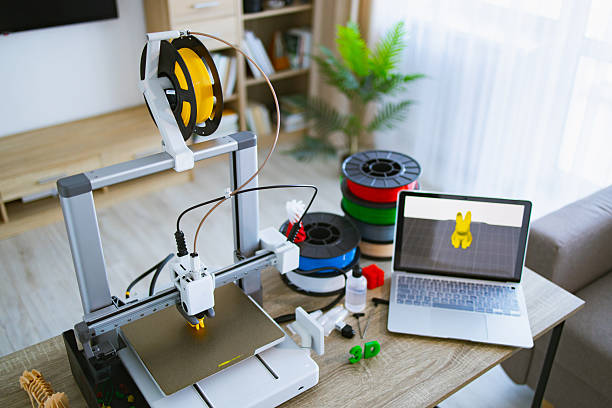
| Printability test | Nozzle compatibility, feeding behavior, layer consistency, and visible defects | Identifies formulation or processing problems |
| Glow test | Initial luminance and decay at defined intervals | Compares brightness retention under controlled conditions |
| Batch verification | Lot identification and quality-control records | Supports repeatability across bulk orders |
For a fair comparison, test samples from different suppliers using the same printer, nozzle, geometry, charging conditions, and measurement procedure.
After sample approval, define acceptance criteria in the purchase specification. These may include diameter tolerance, glow-test conditions, minimum performance targets, packaging requirements, and batch traceability.
4. Can Manufacturers Customize Glow Colors for OEM and Bulk Orders?
Yes. Depending on the manufacturer’s formulation capabilities, OEM suppliers can customize daytime filament color, glow color, and material characteristics for specific commercial applications.
Daytime appearance can be adjusted through compatible colorants or masterbatches. Glow color depends on the photoluminescent pigment system and formulation, with possible options including sky blue, yellow-green, violet, and orange-red.
However, not every pigment system supports every glow shade or achieves the same brightness and afterglow duration. Color customization may also affect pigment loading, dispersion, printability, and final performance.
Before placing a bulk OEM order, buyers should confirm:
- Available daytime and glow-color options.
- Minimum order quantity and sample lead time.
- Custom formulation and color-matching capabilities.
- Diameter tolerance and printability requirements.
- Sample approval and batch-to-batch consistency procedures.
- Packaging, labeling, and documentation requirements.
Request physical samples before approving custom production. This helps ensure that the finished filament meets both visual expectations and technical requirements.
5. Frequently Asked Questions About Glow-in-the-Dark PLA Filament
How can buyers compare the glow performance of different filament samples?
Charge each sample under the same light source, intensity, exposure time, and distance. Then measure brightness at consistent intervals, such as 10, 60, and 300 minutes. Use a suitable measurement instrument and document the testing conditions to make the results comparable.
Why does filament diameter tolerance matter?
Diameter variations change the amount of material fed into the printer. This can affect extrusion consistency and contribute to under-extrusion, over-extrusion, or feeding problems. A target tolerance of ±0.03 mm can support dimensional consistency, but the acceptable range should match the printer and application.
Can glow-in-the-dark PLA filament clog a 0.4 mm nozzle?
It can, depending on pigment particle size, agglomeration, dispersion, and the complete filament formulation. A D50 of 15–25 μm may support printability, but D50 alone does not guarantee compatibility with a 0.4 mm nozzle. Confirm the supplier’s nozzle recommendations and test the material before production.
Does longer afterglow always mean better filament?
Not necessarily. The best formulation depends on the intended application. Buyers should compare initial brightness, decay behavior, color, printability, and the required visibility period rather than selecting a filament based on afterglow duration alone.
What documents should buyers request from a glow filament supplier?
Request an SDS, technical data sheet, pigment information, diameter inspection records, and relevant RoHS or REACH documentation. For regulated applications, identify additional requirements for the finished product and destination market.
6. Key Takeaways for B2B Buyers
Selecting reliable glow-in-the-dark PLA filament requires a combination of material verification, dimensional inspection, print testing, and compliance review.
- Verify pigment chemistry: Compare strontium aluminate and other pigment systems using documented performance data.
- Check particle size and loading: Use D50, loading percentage, and dispersion quality to assess printability and glow performance.
- Confirm dimensional consistency: Review diameter tolerance and test the filament with the intended printer and nozzle.
- Measure afterglow decay: Compare samples under consistent charging and measurement conditions.
- Review applicable documentation: Request an SDS and relevant compliance records before approving commercial orders.
- Validate OEM samples: Confirm custom colors, printability, and batch consistency before bulk production.
Explore Custom Photoluminescent Pigment Solutions with Bangsai
Reliable glow-in-the-dark PLA filament starts with suitable pigment selection, controlled dispersion, and a compatible resin formulation. For manufacturers developing photoluminescent materials, these factors can influence both printing performance and the finished product’s visual effect.
Bangsai supplies photoluminescent pigment solutions for applications that require customized color and glow performance. Contact the technical team to discuss high-brightness glow pigments, custom color development, and B2B supply requirements.
Explore the 12-Color High-Brightness Glow-in-the-Dark Pigments to review available pigment options and discuss your application needs.