
Chemical procurement managers, cosmetics product developers, and industrial coating manufacturers face complex formulation variables when sourcing premium visual effect additives. Incorporating a high-performance cat eye pigment powder into a product line requires a deep understanding of fluid dynamics and polymer compatibility. Specifically, enterprise buyers frequently raise a critical technical question during the bulk purchasing phase: “Our manufacturing lines span across nail gel polishes, UV curable gels, and casting epoxy resins. How significantly does the optical performance of magnetic cat eye pigments vary across these three distinct chemical mediums, and what critical cross-linking parameters must we audit before finalizing a bulk procurement contract?”
Selecting an incompatible pigment grade can lead to rapid particle clumping, poor magnetic shifting response, or premature shelf-life degradation. Ensuring a sharp, brilliant three-dimensional magnetic line requires matching the particle surface chemistry with the viscosity of your target vehicle. This comprehensive B2B technical guide explains how different chemical mediums affect magnetic particles and outlines the essential testing protocols required to guarantee a flawless product rollout.
The Science of Dispersion: How Different Chemical Mediums Dictate Magnetic Realignment
Achieving a striking, high-contrast optical effect relies completely on the physical freedom of the suspended magnetic particles. When a technician applies an external magnet to the wet mixture, the microscopic iron-oxide-coated mica flakes must rotate instantly through the liquid medium to form a sharp, light-reflecting band.
If the surrounding fluid chemistry introduces conflicting polar charges or lacks proper wetting agents, the individual particles will attract one another prematurely and clump together. This clumping locks the flakes in place, turning a dynamic 3D shifting effect into a dull, flat grey streak. Therefore, evaluating the interaction between the pigment surface and your liquid polymers represents a vital checkpoint for your quality control team.
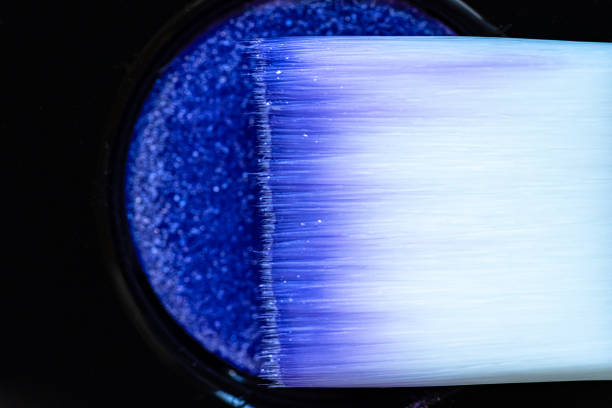
Performance Profiles Across Three Common Industrial Medium Systems
The structural behavior and shifting speed of cat eye pigment powder change drastically depending on the molecular weight and curing mechanics of your base fluid.
1. Professional Nail Gel Polish and UV Curable Gel Systems
Nail gel formulations utilize a precise blend of low-viscosity reactive monomers and photoinitiators that cure rapidly under specialized UV or LED light sources. In these delicate cosmetic systems, the raw magnetic flakes must exhibit exceptional chemical suspension stability.
If the pigment density misaligns with the monomer system, the heavy metallic particles will settle to the bottom of the retail bottles within weeks. Premium cosmetic-grade magnetic glitters feature specialized surface treatments that keep them uniformly suspended for over six months, ensuring end consumers can always create a crisp, flawless velvet or cat-eye line on the nail plate.
2. Commercial Epoxy Casting Resin Frameworks
Industrial and artisan casting epoxies present a completely different fluid environment characterized by high initial viscosities and slower exothermic curing timelines. The cross-linking speed and ambient temperature of the mixed resin directly control how fast your magnetic particles can travel.
Low-viscosity potting resins allow the flakes to glide through the liquid smoothly, creating brilliant, sharp optical bands under simple magnetic blocks. Conversely, thick, high-viscosity casting resins slow down particle movement significantly. This resistance requires your production crew to use stronger rare-earth magnets or extend the magnetic exposure time until the epoxy matrix gels completely.
3. Industrial Surface Coatings and Solvent-Based Printing Inks
When introducing magnetic additives into large-scale automotive paints or specialized packaging inks, chemists must check the system’s basic solvent compatibility. Industrial coatings contain aggressive chemical solvents, water-borne emulsions, or high-temperature baking elements that can easily corrode unprotected metal powders.
Sourcing agents must ensure their suppliers provide specialized, silica-encapsulated, or passivated magnetic grades. This protective outer shielding seals the core iron oxides away from harsh solvent attacks, preventing oxidation bubbles and securing excellent color fastness during intense industrial curing cycles.

Strategic Sourcing Framework for Bulk Procurement Audits
Wholesale purchasing agents can secure optimal product stability and maximize factory production margins by following three strategic evaluation guidelines before signing a final supply contract.
-
Insist on Specialized Formulation Wetting Trials: Do not purchase bulk pigment quantities based solely on a raw powder sample inspection. Always require your manufacturing vendor to provide pre-dispersed wet samples mixed directly into your specific base monomer or resin formula to verify true optical performance.
-
Verify Six-Month Anti-Settling Metrics: Demand documented laboratory centrifuge data or real-time shelf stability records. Ensuring the magnetic flakes resist hard packing at the bottom of your containers protects your retail distribution network from expensive defective product returns.
-
Confirm Cross-Link Rheology Compatibility: Evaluate the particle size distribution logs of your supplier to match your application equipment. Finer micron sizes perform beautifully in thin-film UV gel applications, while larger particle grades deliver maximum reflectivity in deep, high-clarity epoxy art pours.
Conclusion: Enhance Product Performance with Reliable Magnetic Pigments
Developing successful cosmetic products, resin applications, and industrial coatings requires high-quality magnetic pigment additives with stable performance. Choosing the right cat eye pigment powder helps manufacturers achieve consistent effects, reliable processing, and attractive visual finishes.
Therefore, selecting properly treated magnetic pigments can improve dispersion stability, reduce oxidation risks, and maintain strong magnetic effects during production. High-purity pigments also support smoother manufacturing processes across different cosmetic, polymer, and coating formulations.
By working with an experienced pigment supplier, brands can access customized solutions, compatibility testing, and a stable bulk supply for long-term production needs. Contact our material engineering team to discuss your formulation requirements and explore suitable cat eye pigment solutions for your next project.